
Vienna, Austria
September 03, 2026
Scope and Motivation
Since 2010, the year of initiation of annual Imagenet Competition where research teams submit programs that classify and detect objects, machine learning has gained significant popularity. In the present age, Machine learning, in particular deep learning, is incredibly powerful to make predictions based on large amounts of available data. There are many applications of machine learning in Computer vision, pattern recognition including Document analysis, Medical image analysis etc. In order to facilitate innovative collaboration and engagement between document analysis community and other research communities like computer vision and images analysis etc., here we plan to organize this workshop of Machine learning after the ICDAR main conference.
The topics of interest of this workshop:
Since this workshop is on Machine Learning for document analysis community, recent machine learning and deep learning-based works and their effects on document analysis tasks are welcome. The topics of interest of this workshop include, but are not limited to: machine learning algorithms, including comparative study on CNN, Vision Transformer, Swin Transformer, and other hybrid models towards document analysis, Generative models including diffusion models, Graph Neural network, sequence modelling architecture, Self-supervise learning, Transformers, Large Language models, Vision language models, NLP+Vision multimodal approaches, Federated Learning, other document analysis and handwriting applications using machine learning and deep learning etc..
Relevance for ICDAR:
Since Machine Learning has been used largely in document analysis area hence this workshop has very much relevance with ICDAR.
Important Dates
Paper Submission : May 31, 2026 (Extended)
Acceptance Notification : June 20, 2026
Camera Ready Submission : July 10, 2026
ICDAR-WML 2026 Workshop : September 03, 2026
ICDAR-WML 2026 Workshop Program
Keynote Speakers
Paper Submission
Papers should be submitted via CMT.
Here is the link for submission:
https://cmt3.research.microsoft.com/ICDARWML2026/
WML 2026 will follow a double-blind review process. Authors should not include their names and affiliations anywhere in the manuscript and
authors should also ensure that their identity is not revealed indirectly by citing their previous work in the third person.
The topics of interest of this workshop:
Since this workshop is on Machine Learning for document analysis community, recent machine learning and deep learning-based works and their effects on document analysis tasks are welcome. The topics of interest of this workshop include, but are not limited to: machine learning algorithms, including comparative study on CNN, Vision Transformer, Swin Transformer, and other hybrid models towards document analysis, Generative models including diffusion models, Graph Neural network, sequence modelling architecture, Self-supervise learning, Transformers, Large Language models, Vision language models, NLP+Vision multimodal approaches, Federated Learning, other document analysis and handwriting applications using machine learning and deep learning etc..
Paper Length and publication of Proceedings :
The submitted papers in ICDAR-WML 2026 will have the same policy and
conditions of ICDAR 2026 main conference papers and the ICDAR-WML 2026
proceedings will be published under the Springer Lecture Notes in Computer
Science (LNCS) series. Length of the submitted papers will be up to 17 pages
(including references). Papers should be formatted (latex
or in Word) according to the instructions and style files provided by Springer
available in https://www.springer.com/gp/computer-science/lncs/conference-proceedings-guidelines
We request you to submit your research work in this workshop.
Committee
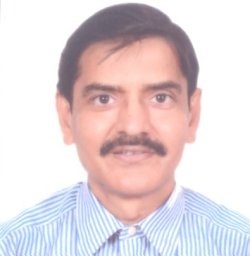
- Umapada Pal, Indian Statistical Institute, India
- DBLP Umapada Pal
- Google scholar Umapada Pal
- Shijian Lu, Nanyang Technological University, Singapore
- DBLP Shijian Lu
- Google scholar Shijian Lu
- Prem Natarajan, Capital One, USA
- DBLP Prem Natarajan
- Google scholar Prem Natarajan
 ,
,